Chinese soft power in action? The ‘Himalayan World’ exhibition at the Guimet Museum

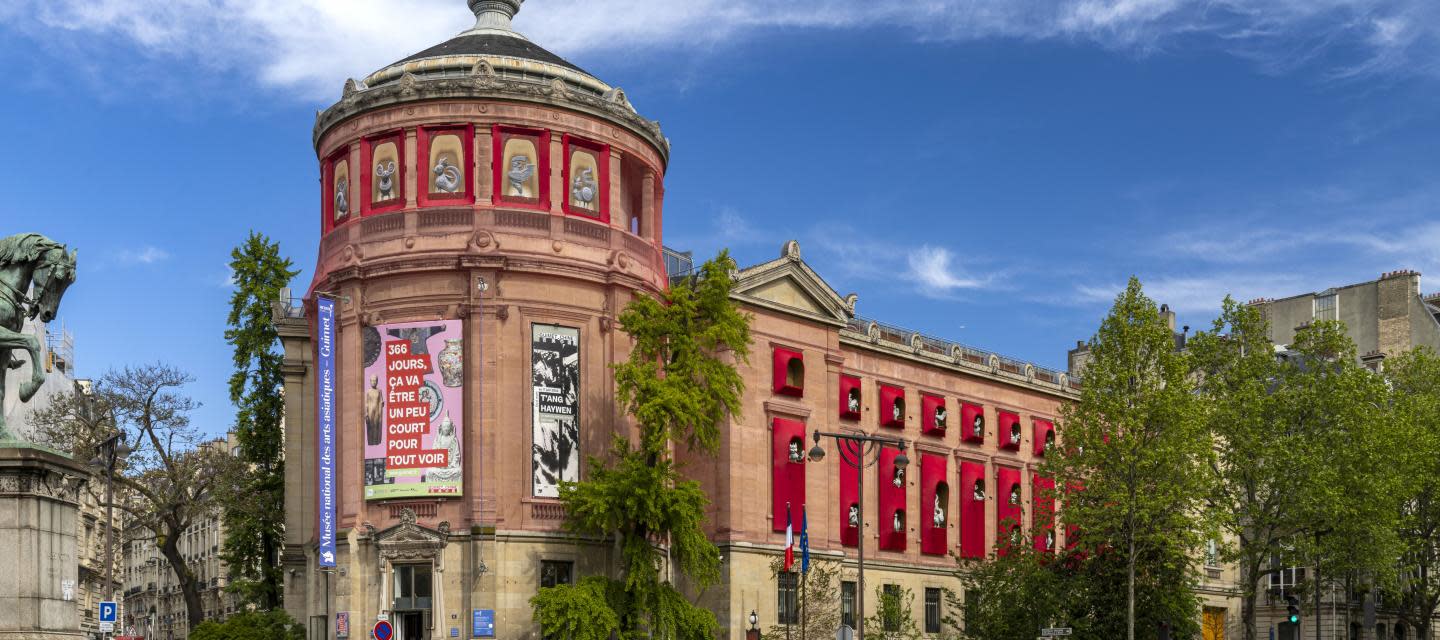
The National Museum of Asian Arts was founded in 1889 in Lyon, then moved to Place d'Iéna in Paris by Émile Guimet. Guimet, who was fascinated by the Eastern World, assembled his personal collections there, brought back from his travels, particularly to Japan, China, and India in 1876-1877. Today, the Guimet Museum has one of the largest collections of Asian art in Europe and the world.
In 2024, its “Tibet-Nepal” exhibition hall was renamed “Himalayan World.” This decision sparked strong reactions from both politicians and the media. This uproar was particularly evident in the press, as evidenced by the publication of numerous articles such as “The Guimet Museum erases the word Tibet” in Libération, “Has the Guimet Museum erased Tibet to please Beijing?” in Le Point, “The risk of Tibet's erasure at work in French museums” in Le Monde, and "No, the Guimet Museum has not yielded to any Chinese pressure" in Le Figaro.
But how can such reactions be explained?
Culture in museums: a tool for diplomacy
The dissemination of a country's culture, understood as “the set of beliefs, customs, ways of thinking and acting” that are unique to it, or “the set of its intellectual and artistic aspects,” is a means for that country to assert its place on the international stage. Indeed, it allows it to charm, to shine, to be “admired, loved” or even respected. In short, culture contributes to a country's “soft power,” which Joseph Nye defines as “the ability to change what others want because of its power of attraction.”
In addition, museums play a privileged role in disseminating a country's culture. While historically they served to showcase the ruling power and its economic and military might by displaying its possessions, their role has now evolved to become, according to François Mairesse, “ambassadors of artists' expertise (...) abroad.” Museums are therefore the instruments of choice for spreading a country's soft power, particularly through the loan of collections or the hosting of exhibitions (both temporary and permanent).
Chinese soft power
In China, the soft power strategy was officially adopted by the Chinese government at the 17th National Congress of the Chinese Communist Party in 2007. In the official discourse, the aim was, on the one hand, to use soft power to “equip itself with comprehensive power” and, on the other hand, to “create a ‘set of favorable environments’ for China's rise to power.” This has resulted, among other things, in massive investments in this area and the launch of new initiatives, such as the opening of Confucius Institutes, the organization of the 2008 Beijing Olympics, and the hosting of the 2010 World Expo in Shanghai.
According to political scientist Li Mingjiang, the soft power strategies implemented by the Chinese government aim in particular to “combat negative perceptions and misunderstandings of China by other countries,” “improve the regime's international image,” and “refute the Chinese threat theory.” In our case, the Chinese government's handling of the Tibet issue combines all three of these challenges in one.
The conflict in Tibet and Tibetan culture
On October 7, 1950, the Chinese People's Liberation Army invaded Tibet, which Mao Zedong considered a Chinese province rather than an independent country. Following this invasion, a treaty was signed in 1951, officially integrating Tibet into China while respecting the Buddhist religion and the rights of the Dalai Lama. However, between 1958 and 1959, the severe repression of Tibetan resistance led to the flight of the Dalai Lama and approximately 90,000 Tibetans to India.
Following the takeover of the territory, the Chinese authorities began a policy of repression and Sinicization of the population with the more or less clear objective of erasing Tibetan national identity in favor of a single Chinese identity. This policy included encouraging mass immigration of Han ethnic groups into Tibetan territory, as well as reforming the Tibetan language to bring its grammar closer to Mandarin: the “proletarian language as spoken by the people,” according to Beijing.
In parallel with the erasure of Tibetan culture within Tibetan territory, China is also attempting to conceal its existence at the international level, notably by changing its name and administrative status in 1965 to the Xizang Autonomous Region. In this way, Beijing is asserting its sovereignty over Tibet by making it a province “like others” within its territory.
Is the Guimet Museum an instrument of Chinese soft power?
The Guimet Museum has very close ties with China. Its board of directors and the Friends of the Guimet Museum are closely linked to the France-China Foundation, whose ambition is to create “a privileged instrument of communication and dialogue between the business, economic, and cultural circles of the two countries.” In addition, one of the museum's main sponsors is Poly Culture China, a subsidiary of China Poly Group Corp, a Chinese state-owned company specialized in the art trade.
All of these factors raise suspicions of Chinese interference within the Guimet Museum, which may have supported the name change of the exhibition hall in order to promote its interests, namely, the removal of the term “Tibet.”
Just as hybrid warfare blurs the line between conflict and peace, China's management of Tibet resembles a method of “sharp power”: this new way for states to assert their influence by blurring the line between soft and hard power. More than just a manifestation of soft power, sharp power is defined by Gilles Rouet as the development of communication strategies aimed at influencing opinion or misleading the public. By attempting to erase the term “Tibet,” the Chinese government is seeking to sway public opinion on a conflict that has always given it bad press on the international stage. By glossing over the military annexation of Tibet, China is sweeping the dark chapters of its history under the rug and expanding its influence in cultural circles in the West, and in our case, in France.
References:
- Anger, C. (2021). L’expansion internationale des musées : entre diffusion du soft power et valorisation économique du patrimoine culturel Article inédit, mis en ligne le 21 avril, 2021. Les Enjeux de l'information et de la communication, 21/3A(S1), 13-27.
- Compagnon, O. (s. d.). Invasion du Tibet par la Chine. Encyclopædia Universalis. https://www.universalis.fr/encyclopedie/invasion-du-tibet-par-la-chine
- Courmont, B. (2012). Le soft power chinois : entre stratégie d’influence et affirmation de puissance. Revue d’études comparatives Est-Ouest, 43(1), 287-309.
- Culture - Définitions, synonymes, prononciation, exemples. (s. d.). Dico en ligne Le Robert. https://dictionnaire.lerobert.com/definition/culture
- Entreprises et mécènes institutionnels. (s. d.). Musée Guimet. https://www.guimet.fr/fr/entreprises-et-mecenes-institutionnels
- Histoire du musée. (s. d.). Musée Guimet. https://www.guimet.fr/fr/histoire-du-musee
- Lombard, A. (2022). Chapitre premier. La culture, enjeu diplomatique. La Diplomatie culturelle (p. 7-19). Presses Universitaires de France.
- Mairesse, F. (2024). Les musées, outils de la diplomatie culturelle française. Dans F. Chaubet, C. Faucher, L. Martin et N. Peyre Histoire(s) de la diplomatie culturelle française : Du rayonnement à l’influence (p. 248-265). Éditions de l'Attribut.
- Musées français : Comment la Chine tente d’imposer son récit. (2024). France Inter. https://www.radiofrance.fr/franceinter/podcasts/le-zoom-de-france-inter/le-zoom-de-france-inter-du-mercredi-20-novembre-2024-3513200
- Riutort, P. (2013). La culture Comprendre ce qui nous fait agir. Premières leçons de sociologie (p. 51-62). Presses Universitaires de France.
- Rouet, G. (2024). Chapitre 1. La culture est-elle un soft power ? Dans G. Rouet, S. Raytcheva et S. Bailly Culture, puissance et pouvoir : Du soft au hard power (p. 14-24). EMS Éditions.
- Subhash, S. (2022). Sinicisation and the Threat of Cultural Genocide in Tibet. National Security, 5(1), 69-101.