AI: Or When domestic Regulations Lead to Diplomatic Tensions


An article co-written with Rémi Pichlak-Baudrand, graduate in European Digital Policy.
Merry Christmas! On December 23, 2025, the US State Department announced the visa ban on Thierry Breton, former European Commissioner for the Internal Market and a key architect of European digital regulations. This event highlights the growing diplomatic tensions between the United States and the European Union over the regulation of the digital sector, particularly artificial intelligence.
Who is Thierry Breton?
French professor of mathematics and computer science by training, he was appointed by the government to head the state-owned company France Télécom, in 2002. In February 2005, he became France’s Minister of the Economy, a position during which he advocated notably for the privatization of highways and the modernization of the economy, seeking, among other things, to facilitate access to financial markets for small and medium-sized enterprises (SMEs). His term ended in May 2007, at the conclusion of Jacques Chirac’s five-year presidency. He subsequently led Atos, a French digital services company, up until 2019, at which point he became European Commissioner for the Internal Market.
Upon joining the European Commission, he advocated for the principle of European digital sovereignty and was tasked with establishing a legal framework to regulate the European digital space. Thus, while the European Union’s flagship digital regulation, the General Data Protection Regulation (GDPR), had already entered into force at the time of his appointment, he is nonetheless the principal architect of the Digital Markets Act (DMA), the Digital Services Act (DSA), both of which came into force in 2022, and the Artificial Intelligence Act (AI Act), which came into force in 2024. He resigned from his post in September 2024 amid disagreements with Commission President Ursula von der Leyen.
The European Digital Landscape
The various European digital regulations, which Breton helped establish, aim to enforce certain standards in the European market. For example, the GDPR establishes a principle of fairness in the processing of citizens’ personal data, which must be processed lawfully and transparently, for defined and limited purposes, and must be secured; and most importantly it gives citizens the right to oppose the processing of their data (the well-known “cookies” that everybody accepts). The DMA, for its part, aims to prevent very large platforms from imposing unfair terms on businesses and consumers, thereby favouring competition. The DSA protects internet users from illegal, dangerous, and harmful content by regulating the activities of online intermediary services, particularly large digital platforms. Finally, the AI Act aims to promote the development of safe, trustworthy, and ethical AI, using a risk-based approach.
Yet, regulating the digital world is not exactly the same thing as regulating other sector of the economy. For example, when it comes to the GDPR, a company that want to work in the EU have to comply to certain rules that are not mandatory in the US. It must make sure that it does not forget to ask the user for its consent to process its data. But how can it make sure that the user is a European citizen? Or that the user is an American citizen on EU soil? In both cases it has to follow GDPR requirements to process its data (and companies want to process personal data: it’s VERY lucrative). Most of the time it is simply impossible or too expensive to apply different rules on different continent, so the result is that company apply the GDPR by default as it is the most restrictive legal framework. That way, they are sure not to break any rule. As a result, European regulations become global standards, a phenomenon known as “unilateral regulatory globalization,” more commonly referred in Europe as the “Brussels Effect.”
But it is not just regulatory standards that are exported in this way; European values are as well. Indeed, the European digital landscape is based on objectives, a vision, and principles. European regulations are not created solely to serve the interests of states or business leaders; the interests of citizens lie at the heart of these regulations. Those principles are clearly in line with the founding values of the EU as set forth in Article 2 of the Treaty on European Union: “The Union is founded on the values of respect for human dignity, freedom, democracy, equality, the rule of law and respect for human rights, including the rights of persons belonging to minorities. These values are common to the Member States in a society in which pluralism, non-discrimination, tolerance, justice, solidarity and equality between women and men prevail.” Thus, these principles are also exported alongside the standards. Consequently, the EU shapes international politics through norms and values, imposing a certain vision of “normality” through the dissemination of its regulations.
However, when it comes to the digital sector, this export of “normality” is getting stuck. Different visions of digital sovereignty are at odds, particularly on both sides of the Atlantic. Indeed, European digital sovereignty is rooted in the values outlined above. This vision is perfectly illustrated by this statement issued at the European Digital Sovereignty Summit (November 18, 2025): European stakeholders share an “ambition to strengthen Europe’s digital sovereignty in an open manner as a cornerstone of our economic resilience, social prosperity, competitiveness and security.” Thus, the EU aims to set global standards for responsible technology, ensuring “digital transformation respects EU values and benefits all EU citizens”. In short, trustworthy leadership and strategic autonomy.
And this vision of digital sovereignty, grounded in European values and spread through the “Brussels effect”, clashes with the American one: this is the root of the latest attacks.
European digital regulations “that are all designed to harm, or discriminate against American Technology”
Following Trump's return to the White House in January 2025, his administration's attacks on European digital regulations have intensified. For example, at the world AI Summit in February 2025, Vice President JD Vance called for regulations that would not “strangle” nor “paralyze” the AI industry. In August of the same year, Donald Trump himself threatened additional tariffs for countries implementing “Digital Taxes, Digital Services Legislation, and Digital Markets regulations [that] are all designed to harm, or discriminate against American Technology”, implicitly targeting European regulations. And then, on December 23, there was Thierry Breton’s visa ban, the starting point of our article. Regarding this particular attack, two points are worth mentioning.
On the one hand, the US visa ban imposed on Thierry Breton is not a new measure introduced by the Trump administration. In fact, banning someone from entering the country is generally part of a broader package of sanctions, under which the targeted individuals are placed on the Specially Designated Nationals (SDN) list. These sanctions, administered by the Office of Foreign Assets Control (OFAC), generally include, in addition to a travel ban, the freezing of their financial assets and a prohibition on US companies to provide them services. This list, which now includes approximately 15,000 individuals, was initially used against those posing a threat to the United States, such as terrorist or Islamic groups. However, US sanctions appear to be increasingly used to serve a political agenda, with the Trump administration implementing a system of targeting and intimidating individuals to suit its diplomatic interests. This is particularly evident when examining the sanctions imposed on nine judges of the International Criminal Court, including Prosecutor General Karim Khan in 2025. These sanctions were imposed following the ICC’s issuance in November 2024 of an international arrest warrant against Israeli Prime Minister Benjamin Netanyahu, a close ally of the United States. It is worth noting here that Thierry Breton is not on this list. However, it is unprecedented for a former French minister and European Commissioner to be targeted by such a sanction. Furthermore, the sanction itself can be seen as a threat to go even further, as if the next step would be to add Thierry Breton to this list. If targeting Breton or Khan poses no real risk to the institutions they represent, it still opens the door to personal retaliation against anyone making decisions that run against US interests.
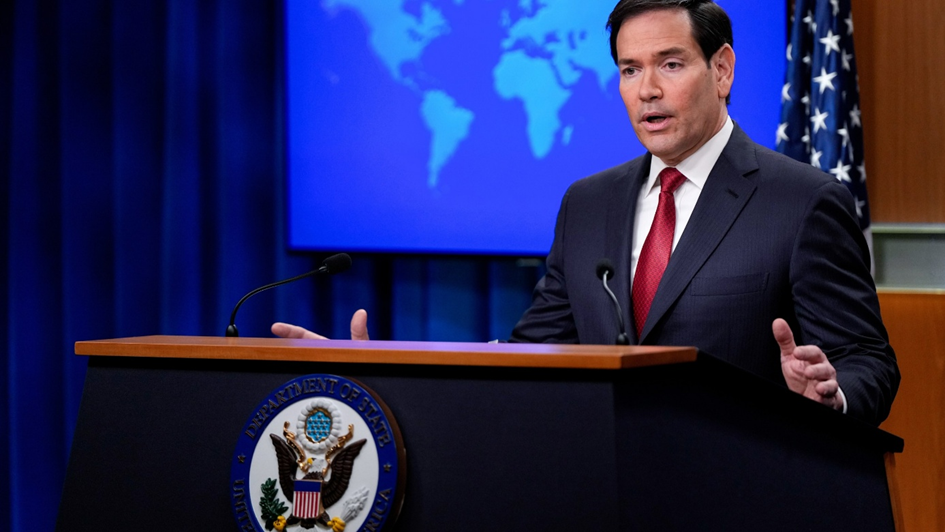
On the other hand, it is worth analysing how this sanction was announced. It was made in a press statement by US Secretary of State Marco Rubio on December 23, 2025, soberly titled “Announcement of Actions to Combat the Global Censorship-Industrial Complex.” In terms of wording, bellicose language is used to create the impression of a war against an existential threat to the US, namely European digital regulations. Added to this is deliberately exaggerated and degrading vocabulary, describing European regulations as the “Global Censorship-Industrial Complex” and the individuals targeted, including Thierry Breton, as “radical activists.” This sanction thus resembles a personal attack more than a genuine act of international policy.
Sovereignty through deregulation : the American way of dominating the digital market
In light of these attacks on European institutions and the people who represent them, one question inevitably arises: why do European digital regulations pose such a problem for the United States? How can we explain the U.S. administration’s firm and systematic opposition to Europe regulating its internal digital market?
First, it is important to understand the significance of the digital industry in the United States. While it may seem obvious to us that “ICTs” (Information and Communication Technologies) are also of paramount importance in Europe today, the scale is incomparable to that of our neighbors across the Atlantic. The most striking figure, to begin with: in 2025, the digital sector in the United States accounted for nearly $5 trillion, or 18% of GDP, comparable to the share of GDP represented by public spending or all manufacturing output. And this number is all the more impressive given its growth; in 2020, it was “only” about $1.8 trillion, or 11% of GDP. At the same time, while the labor market in the US is growing by an average of 1.1% per year, the labor market linked to the digital economy is growing by more than 12% per year. All of this serves to illustrate that the digital technology sector is a real booster of the U.S. economy. This remarkable growth is at least partly due to a policy of minimal regulation on the part of the federal government.
“What is permitted offline [is] permitted online, and what is prohibited offline [is] prohibited online”
However, once established in Europe, companies from the United States (and elsewhere) must comply with the regulatory requirements of the EU. The GDPR limits their ability to collect and process user data; the DMA restricts their ability to use their dominant positions to further lock down the market; and the DSA aims to ensure freedom of expression and respect for the law online, even if this runs counter to the algorithmic logic that keeps us spending more and more time on social media.
As Thierry Breton noted in 2020 on the eve of the DSA’s introduction: “Today, we get the impression that this [online] space is a lawless zone. And in many cases, that’s true. Laws apply to our economic, social, and territorial spaces; they must also apply to the informational space”. We can therefore understand the frustration of these digital giants. A lawless zone where only the law of the strongest reigns is quite comfortable… when you are the strongest. Transforming this online Wild West so that “what is permitted offline [is] permitted online, and what is prohibited offline [is] prohibited online” potentially challenges the dominance of these giants, which were built on a model based precisely on the absence of rules.
In fact, the consequences were not long in coming. In 2025 alone, four of the five “GAFAM” (Google, Apple, Facebook, Amazon, Microsoft) were fined, or came very close to being fined, in Europe under the DMA:
Apple was fined 500 million euros for “violating its obligation not to steer users ." In particular, it was accused of creating technical and commercial barriers to prevent the use of services other than those from its App Store on Apple’s devices, thereby locking its customers into an ecosystem over which the company has sole control, regardless of what the competition may think.
Meta was fined 200 million euros for failing to comply with the obligation to give consumers the choice of a service that uses less of their personal data.
Microsoft narrowly avoided a penalty after being accused of abusing its dominant position to force its customers to use its software by limiting their ability to switch to other solutions. In practice, the company had to commit to facilitating the interoperability (compatibility) of its software with competing tools, and to creating cheaper versions of Office365 that do not automatically include the entire software suite (Word, Excel, PowerPoint, OneNote, Teams, Outlook, OneDrive, Copilot, etc.).
And finally, Google, the best in its category, was fined 2.95 billion euros in 2025 for abusive practices in the field of online advertising technology. Plus, the company alone holds two consecutive records for the largest fine imposed by Europe: 2.4 billion in 2017 (confirmed in 2024), subsequently surpassed in 2018 by a fine of 4.3 billion (even though these fines were not decided based on the DMA or DSA) what a track record!
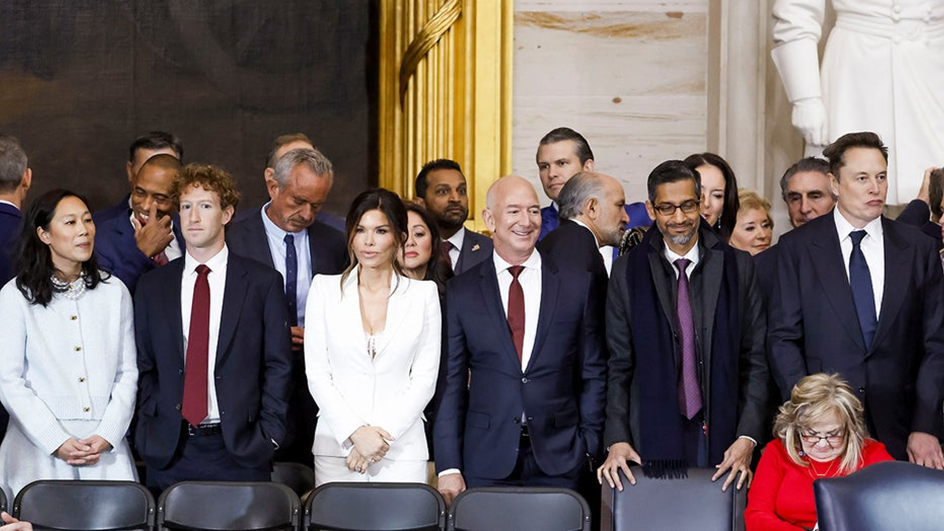
Given this history of sanctions, it’s no surprise that these tech-giants harbor some resentment toward the European institutions that keep throwing wrenches into their plans. Given all these constraints imposed by the EU and considering the importance of the big-tech sector in the United States, it is also not surprising that the U.S. government is doing its best to “encourage” Europe to reconsider its approach of digital regulation. One might also assume that these companies’ alignment with the Trump camp has potentially motivated his administration all the more to intensify its attacks. It is worth noting that the GAFAM companies, all founded in California and traditionally deeply rooted in the Democratic party, were all major contributors to Donald Trump’s 2025 campaign, as he made the deregulation of the digital economy one of his key priorities.
The Specific Case of Artificial Intelligence
Like other digital technologies, artificial intelligence represents a very significant proportion of the U.S. economy. According to some studies, it is estimated that by 2025, AI-related investments will have contributed 3% to U.S. GDP, equivalent to the accommodation and food services industry, an exceptional figure for such a young technology. Investments in information processing equipment alone (the components that enable AI models to function) are estimated to have contributed nearly 1.8% of U.S. GDP, roughly as much as the agriculture and education sectors combined.
Despite a few minor competitors, notably from China and France, the most advanced companies in this field are undoubtedly American, such as OpenAI and Anthropic, just to name a few. Furthermore, it is important to note that the United States holds a monopoly on one key element of the AI value chain. Nvidia is currently the only company in the world designing the electronic components capable of processing the colossal amount of calculations required by AI models. Whether it’s MystralAI’s Le Chat in France, DeeplBlue in China, or ChatGPT, all these models run in data centers where thousands of “GPUs” (Graphics Processing Units) are concentrated, and all of them come from the same company. However, the advancement and widespread adoption of AI require ever-greater computing power and, consequently, an ever-increasing number of Nvidia components. It is this almost-unchallenged monopoly that has enabled the company to surpass a $5 trillion market valuation in 2025, the first and only one in history.
Beyond Nvidia, it is all companies engaged in the AI value chain that have seen their market capitalizations skyrocket due to an unprecedented surge in demand (and expected surge in demand) for this technology. This exceptional economic performance relies, at least in part, on the U.S. administration’s commitment not to interfere in the affairs of these companies; the lack of regulation is seen as a driver of innovation and a guarantee of technological superiority. The Trump administration directly declared, “shifting to a forward-leaning, pro-innovation, and pro-competition mindset rather than pursuing the risk-averse approach of the previous administration.” In its “America’s AI Action Plan” published in July 2025, the very first item, before any other topic, reads: “Remove Red Tape and Onerous Regulation: To maintain global leadership in AI, America’s private sector must be unencumbered by bureaucratic red tape.” It could hardly be clearer.
Yet technological superiority is not merely an economic issue, it is also a matter of military and geopolitical superiority: AI powers ChatGPT as much as it does combat drones. It writes your essays as much as it does domestic surveillance. The US government makes an extensive use of AI technologies, and AI providing companies rely heavily on government contracts, especially in the defense sector. The best examples of that are the recent contract signed by OpenAI with the US Department of Defense, and the company Palantir who is working with ICE (the US Immigration and Custom Enforcement Agency) to help track and deport undocumented migrants.
Ensuring the superiority of American technologies serves to guarantee economic and military hegemony, and according to the US, maintaining this hegemony requires deregulation even if it comes with sacrifices on citizens' privacy and fundamental rights.
“To maintain global leadership in AI, America’s private sector must be unencumbered by bureaucratic red tape”
At the same time, and as we mentioned earlier, the European strategy is quite different. AI must certainly be a tool serving European economy and sovereignty, but not at the expense of its citizens. One might therefore suspect that the much-heralded announcement of a brand-new regulation intended to provide a comprehensive legal framework for artificial intelligence is making the Americans and their deregulation strategy cringe.
The AI Act has multiple objectives: to ensure that AI systems placed on the European market are safe, respect fundamental rights, EU values, the rule of law, and environmental sustainability; to promote the adoption of human-centered and trustworthy AI; and to guarantee a uniform legal framework to facilitate investment and innovation, all based on a risk assessment method. In short, the exact opposite of what the U.S. administration promotes with its “pro-innovation […] rather than pursuing the risk-averse approach”.
In broad terms:
The text categorically prohibits certain uses of AI, such as social scoring systems, mass biometric surveillance in public spaces, or cognitive manipulation tools; these are systems that pose unacceptable risks.
It then imposes strict requirements on systems used in certain already regulated sectors such as biometrics, security, defense, education, employment, and medical devices. These are high-risk systems.
It requires systems associated with a need for transparency regarding the use of AI to inform users that they are interacting with artificial intelligence (such as your average customer service chat-bot). These are limited-risk systems.
And finally, a number of transparency rules and copyright compliance requirements for “General-Purpose AI models”, meaning models capable of performing a wide range of tasks. Example : ChatGPT.
If we now draw a parallel with the American companies we mentioned earlier, we quickly realize the source of the problem. Mass surveillance to detect potential migrants: an unacceptable risk. AI for military use: significant constraints regarding transparency and ethics, and a ban on a wide range of usage. Large-scale data harvesting to feed ChatGPT: still possible, but only with a lot more transparency and by compensating copyrights owner. This helps explain the widespread frustration among Americans companies and government officials.
What is certain is that the very concept of sovereignty, and even more so that of digital sovereignty, differs radically on each side of the Atlantic. For one, it is about guaranteeing citizens’ fundamental rights and free competition; for the other, it is about economic and geopolitical dominance through total freedom of enterprise. While these two visions seem difficult to reconcile, there are genuine efforts on the European side, notably a major project to simplify digital regulations through the Digital Omnibus presented by the Commission in November 2025. It remains to be seen whether the US will be receptive to this initiative and make an effort to ease tensions. Only time will tell.
References:
al Mutawaly, S. (2025). AI Deregulation Sweeps Both Sides of the Atlantic. Heinrich Böll Stiftung. https://us.boell.org/en/2025/12/19/ai-deregulation-sweeps-both-sides-atlantic
Amnesty International. (2025). Que signifient les sanctions de l’administration Trump contre la CPI pour la justice et les droits humains ? Amnesty International. https://www.amnesty.org/fr/latest/campaigns/2025/03/what-do-the-trump-administrations-sanctions-on-the-icc-mean-for-justice-and-human-rights/
Bourgin. (2025). Microsoft échappe aux sanctions de l’UE après avoir dissocié Teams d’Office 365. L’Usine Digitale. https://www.usine-digitale.fr/article/microsoft-echappe-aux-sanctions-de-l-ue-apres-avoir-dissocie-teams-d-office-365.N2237777
Bradford, A. (2020). The Brussels Effect. In A. Bradford, The Brussels Effect (1st edn, pp. 25–66). Oxford University PressNew York. https://doi.org/10.1093/oso/9780190088583.003.0003
Brezar, A. (2025). US visa ban targets ex-Commissioner Breton over alleged censorship. Euronews. https://www.euronews.com/my-europe/2025/12/24/us-visa-ban-targets-former-eu-commissioner-breton-over-alleged-social-media-censorship
Burwell, F., & Propp, K. (2026). Digital sovereignty: Europe’s declaration of independence? Atlantic Council. https://www.atlanticcouncil.org/in-depth-research-reports/report/digital-sovereignty-europes-declaration-of-independence/
Caulcutt, C. (2025). JD Vance warns Europe to go easy on tech regulation in major AI speech. POLITICO. https://www.politico.eu/article/vp-jd-vance-calls-europe-row-back-tech-regulation-ai-action-summit/
Consolidated version of the Treaty on European Union. (n.d.).
Dimitriadis, D. (2025). US vs EU AI Plans—A Comparative Analysis of the US and European Approaches. DCN Global. https://dcnglobal.net/posts/blog/us-vs-eu-ai-plans-a-comparative-analysis-of-the-us-and-european-approaches
European Commission. (n.d.-a). Digital Decade—Policy programme | Shaping Europe’s digital future. Retrieved 20 March 2026, from https://digital-strategy.ec.europa.eu/en/policies/digital-decade-policy-programme
European Commission. (n.d.-b). Pratiques anticoncurrentielles: La Commission inflige à Google une amende de 4.34 milliards d’euros pour abus de position dominante en ce qu [Text]. European Commission - European Commission. Retrieved 30 March 2026, from https://ec.europa.eu/commission/presscorner/detail/fr/ip_18_4581
European Commission. (2025a). DMA: La Commission inflige une amende de 500 millions d’euros à Apple et de 200 millions d’euros à Meta - Représentation en France. https://france.representation.ec.europa.eu/informations/dma-la-commission-inflige-une-amende-de-500-millions-deuros-apple-et-de-200-millions-deuros-meta-2025-04-23_fr
European Commission. (2025b). La Commission inflige à Google une amende d’un montant de 2,95 milliards d’euros pour pratiques abusives dans le domaine des technologies publicitaires en ligne—Représentation en France. https://france.representation.ec.europa.eu/informations/la-commission-inflige-google-une-amende-dun-montant-de-295-milliards-deuros-pour-pratiques-abusives-2025-09-05_fr
European Commission. (2026). AI Act | Shaping Europe’s digital future. European Commission. https://digital-strategy.ec.europa.eu/en/policies/regulatory-framework-ai
Executive Office of the President of the United States. (2025). America’s AI Action Plan.
Franke, U. (2021). Artificial Intelligence diplomacy | Artificial Intelligence governance as a new external policy tool. European Parliament.
Hansen. (2025). IAB Research: Digital Economy Surges to $4.9 Trillion, Fuels 28.4 Million U.S. Jobs Across All 435 Congressional Districts. IAB. https://www.iab.com/news/measuring-digital-economy-2025/
Haskins, C. (2025). ICE Is Paying Palantir $30 Million to Build ‘ImmigrationOS’ Surveillance Platform. Wired. https://www.wired.com/story/ice-palantir-immigrationos/
King, B. (2026). OpenAI announces new deal with Pentagon—Including ethical safeguards—POLITICO. POLITICO. https://www.politico.com/news/2026/02/28/openai-announces-new-deal-with-pentagon-including-ethical-safeguards-00805546
Malingre, V. (2020). Thierry Breton: « Dans bien des cas, l’espace numérique est une zone de non-droit ». Le Monde. https://www.lemonde.fr/economie/article/2020/10/22/thierry-breton-dans-bien-des-cas-l-espace-numerique-est-une-zone-de-non-droit_6056957_3234.html
Mataloni, L., Pinard, K., O’Connell, C., & OConnell, C. (n.d.). Gross Domestic Product, 3rd Quarter 2025 (Updated Estimate), GDP by Industry, and Corporate Profits (Revised)
Maupas, S. (2025). La vie de Nicolas Guillou, juge français de la CPI sous sanctions des Etats-Unis: « Vous êtes interdit bancaire sur une bonne partie de la planète ». Le Monde. https://www.lemonde.fr/international/article/2025/11/19/nicolas-guillou-juge-francais-de-la-cpi-sanctionne-par-les-etats-unis-face-aux-attaques-les-magistrats-de-la-cour-tiendront_6654016_3210.html
Montgomery, B. (2026). Big tech continues to bend the knee to Trump a year after his inauguration. The Guardian. https://www.theguardian.com/technology/2026/jan/20/trump-tech-alliance-datacenters-social-media
Nicholson, J. R. (n.d.). New Digital Economy Estimates.
Preter, C. D. (2025). « Des citoyens européens sous sanctions américaines sont effacés économiquement et socialement dans l’UE ». Le Monde. https://www.lemonde.fr/idees/article/2025/07/23/des-citoyens-europeens-sous-sanctions-americaines-sont-effaces-economiquement-et-socialement-dans-l-ue_6623219_3232.html
Rubinton, H., & Ankit Patro, B. (2026). Tracking AI’s Contribution to GDP Growth. Federal Reserve Bank of St. Louis. https://www.stlouisfed.org/on-the-economy/2026/jan/tracking-ai-contribution-gdp-growth
Rubio, M. (n.d.). Announcement of Actions to Combat the Global Censorship-Industrial Complex. United States Department of State. Retrieved 28 March 2026, from https://www.state.gov/releases/office-of-the-spokesperson/2025/12/announcement-of-actions-to-combat-the-global-censorship-industrial-complex/
The White House. (2025). Fact Sheet: Eliminating Barriers for Federal Artificial Intelligence Use and Procurement. The White House. https://www.whitehouse.gov/fact-sheets/2025/04/fact-sheet-eliminating-barriers-for-federal-artificial-intelligence-use-and-procurement/