Study Week Day 4 : Military Diplomacy


On the fourth and final day of our study week, we had the opportunity to focus on NATO: its organisation, its various components, and its role in the war between Russia and Ukraine.
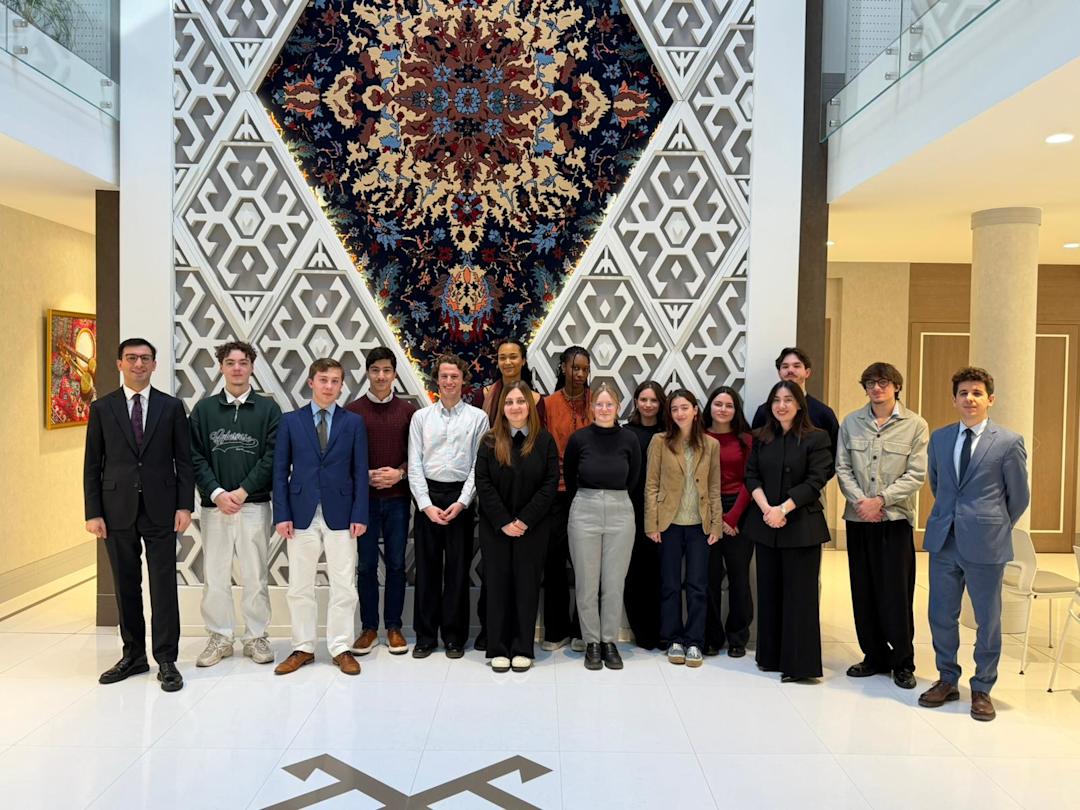
To start the day, we had the occasion to visit NATO headquarters in Brussels as part of a meeting with Belgium's Permanent Representation to NATO. The visit began with a discussion with Thomas Morin-Robinson, Program Officer in NATO's Public Diplomacy Division, which is responsible for communicating the Alliance's message to various audiences, to explain its role and missions. He reviewed the history and development of the transatlantic organization since the end of World War II, before answering our questions about the current geopolitical environment.
We then had the privilege to meet with Ms Marie Huberlant, a political advisor at the Belgian delegation to NATO who is responsible for issues relating to Ukraine and the eastern flank. She presented Belgium's role within the Alliance and how diplomatic representation functions on a day-to-day basis, in particular explaining NATO's decision-making structure. While permanent civilian representatives sit on the Council to make general political decisions, permanent military representatives meet in the Military Committee to prepare military advice for the Council. Civilian and military staff prepare elements for decision-making, organise the work of the committees and ensure the implementation of adopted decisions.
Ms Huberlant also outlined Belgium's positions on key strategic issues such as the eastern flank, deterrence, defence innovation and NATO's role in the context of the Russian–Ukrainian conflict, considering its evolution and future implications. Finally, she discussed her unconventional career path, revealing that she had not initially intended to pursue a diplomatic career. She described her preparation for the competitive examination and her various posts abroad. Her testimony emphasised that a career in diplomacy can take many different forms, despite the common misconception that it is a strictly linear path.
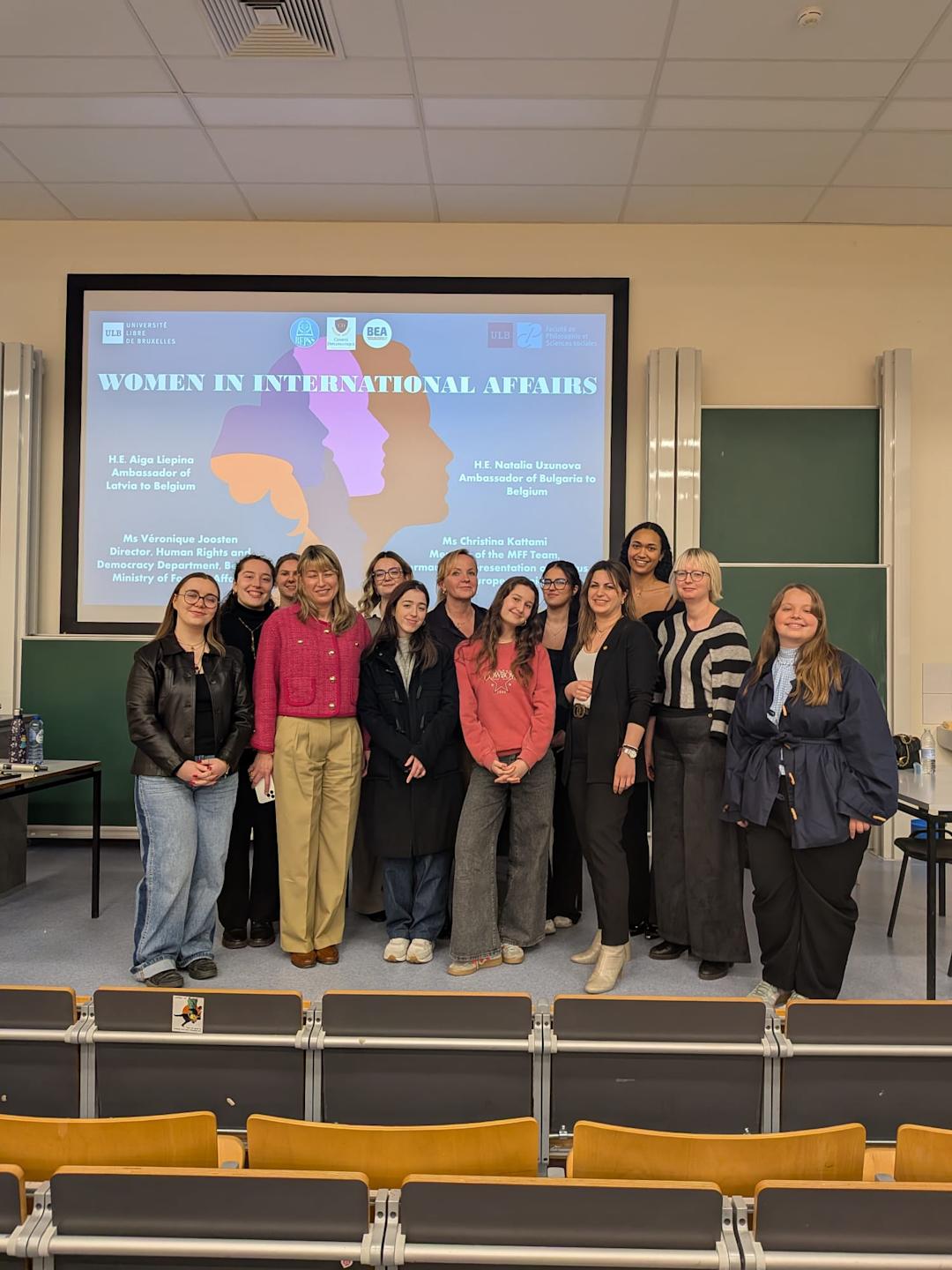
At the end of the day, we organized a conference on our campus entitled NATO’s Role in the Russo-Ukrainian Conflict, in the form of a panel , bringing together several specialists in Euro-Atlantic security issues and European policies. The discussion brought together Andrius Avizius, Director of the Political Committee of the NATO Parliamentary Assembly, Dr. Elie Perot, professor and researcher at the Brussels School of Governance (VUB), specializing in international security, European defense, and transatlantic relations, and Professor Vladimir Zherebov, visiting professor at the College of Europe and expert on Russia and the post-Soviet space, particularly Russia's political and strategic dynamics. The panel also included Teun Janssen, parliamentary assistant accredited to a Member of the European Parliament from the Volt party and trainer in foreign policy, security, and European Union enlargement, as well as Suzana Carp, climate policy expert and political candidate for Volt Belgium.
The conference focused on the role of NATO and the European Union in the war in Ukraine, revisiting the root causes of the Russian invasion and the limits of Western support for Kyiv. Discussions centered on how NATO is seeking to assist Ukraine militarily while avoiding direct confrontation with Russia, raising internal debates about “red lines,” Alliance cohesion, and the risk of escalation.
The discussions also addressed Russia's perception of NATO and EU enlargement, the obstacles to ending the conflict, and Ukraine's prospects for European and Euro-Atlantic integration. Finally, we broadened the discussion to include non-military issues, such as hybrid threats, political divisions in Europe, and the environmental consequences of war, emphasizing that lasting stabilization in the region will depend as much on political choices as on security considerations. To end the evening, we organized a cocktail reception with a mini buffet to allow for more informal exchanges between the speakers and all the participants, bringing this week of learning to a close.
We would like to extend our warmest thanks to all the speakers and guests who enlightened us on various aspects of diplomacy during the study week. We would also like to thank all the participants for their involvement until the very end.